Contents 11 sections
Plant-based protein raw materials differ not only in their protein content. The raw material, manufacturing process and further processing also influence their sensory, nutritional and technological properties.
Broadly speaking, a distinction can be made between protein concentrates, protein isolates and protein hydrolysates, among others. The boundaries are not always strictly defined and can vary depending on the raw material and manufacturing process.
When selecting a suitable plant protein, the decisive factor is therefore not simply the highest possible protein content, but above all its suitability for the application in question.
Protein concentrates
Protein concentrates are produced by partially removing the non-protein components of the starting raw material. This increases the relative proportion of protein.
Different processes are used depending on the raw material. For pulses, dry fractionation plays a particularly important role, whereas for oilseeds de-oiling is a decisive process step.
Depending on the raw material and process, plant-based protein concentrates typically reach protein contents of approx. 50 to 65%.
Oilseeds: de-oiling as a key process step
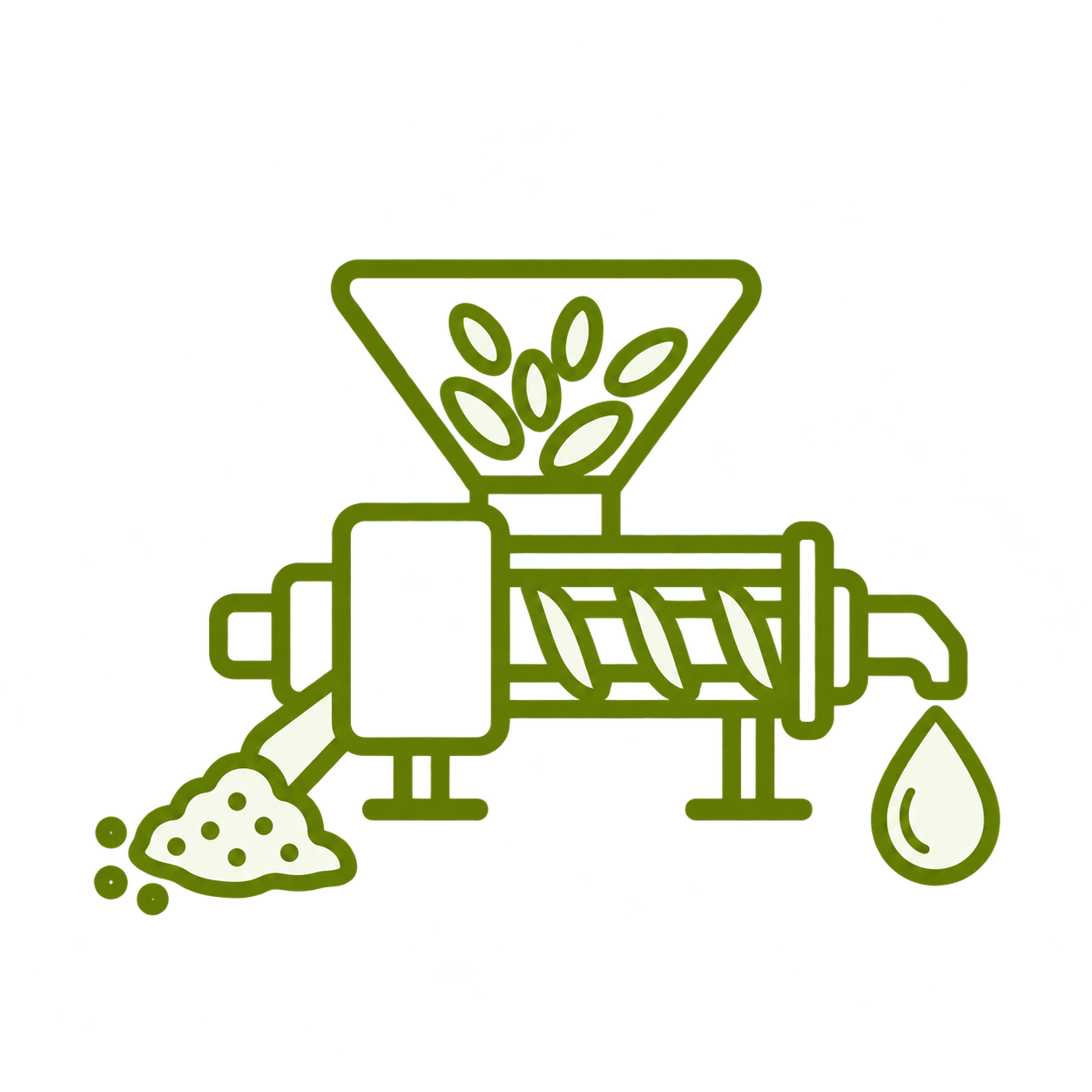
In addition to protein, oilseeds such as sunflower kernels or soya beans contain a considerable proportion of oil. To increase the relative protein content, a large part of this oil is removed first.
This can be done, for example, by mechanical pressing, extraction processes or a combination of different process steps. Intermediate products include press cake or de-oiled flours, in which the protein is already considerably concentrated.
The achievable protein content and the properties of the concentrate depend, among other things, on the degree of de-oiling, the proportion of hull and fibre components and the temperature and process conditions used during processing.
In the case of sunflower protein – for example our Heliaflor® protein grades – the controlled processing of the de-oiled sunflower kernel forms the basis for protein-rich, functional raw materials.
Pulses: dry fractionation by air classification
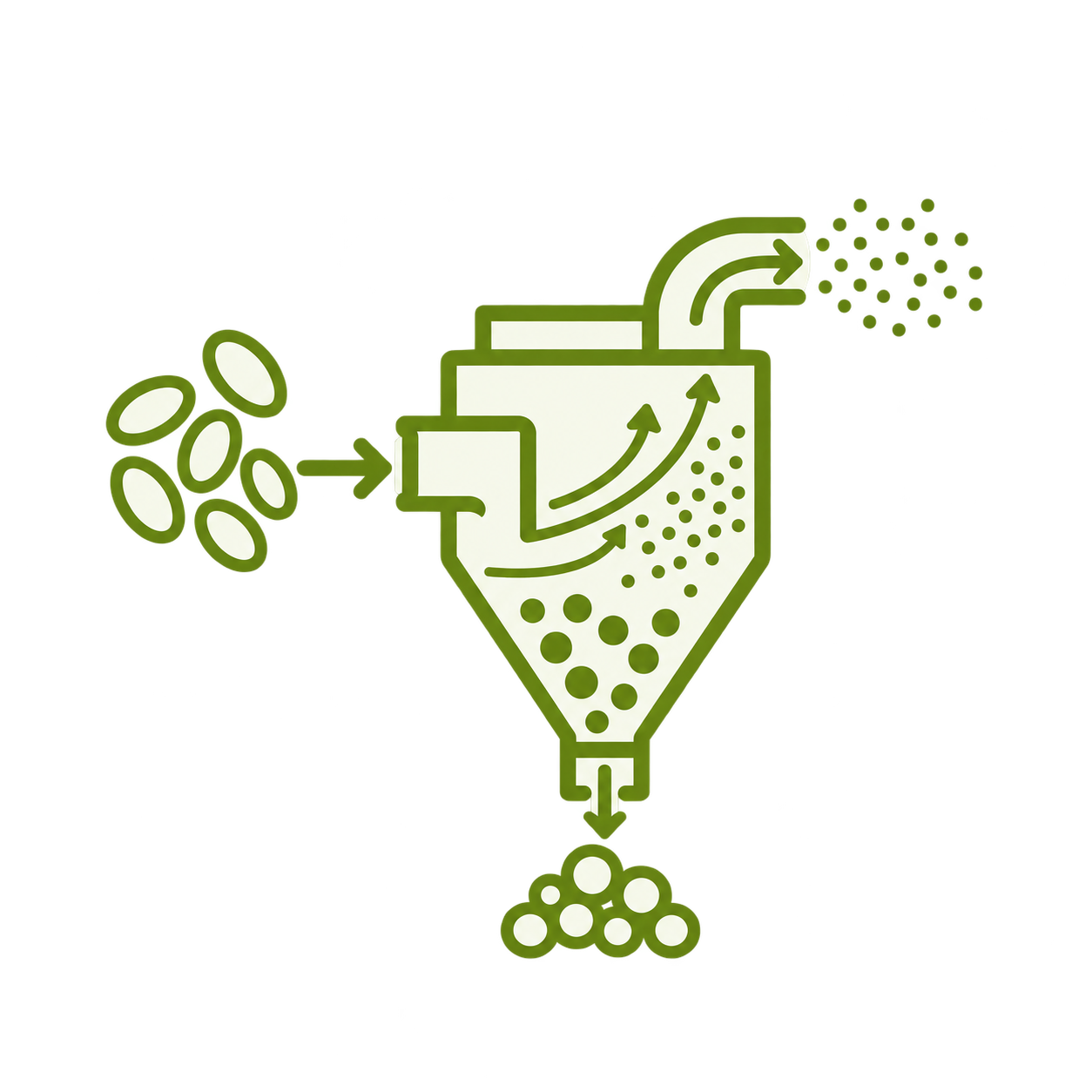
Raw materials such as peas or faba beans are first cleaned and then finely milled. The resulting flour can then be separated into different particle fractions by air classification.
This makes use of differences in particle size, mass and flow behaviour. In this way, protein-rich particles can be separated from fractions with a higher starch content.
As this process is dry, comparatively little water is needed. At the same time, the original protein properties can often be largely preserved.
The achievable protein content depends, among other things, on the starting raw material, the milling and the efficiency of the subsequent fractionation.

Quality characteristics of protein concentrates
Protein content alone does not fully describe the quality of a plant protein. Depending on the application, other properties play an important role.
These include, for example, amino acid composition, digestibility, solubility, water-binding and fat-binding capacity, emulsifying capacity, texture, taste and colour.
The application is what counts: A concentrate with a lower protein content may be better suited, technologically or in sensory terms, to a particular recipe than a more highly purified protein.
Protein isolates
Protein isolates are more highly purified protein fractions. In addition to oil or starch, other components of the raw material are largely removed.
This results in a raw material with a particularly high protein content. Depending on the raw material and definition, protein isolates often have protein contents of more than 80%.
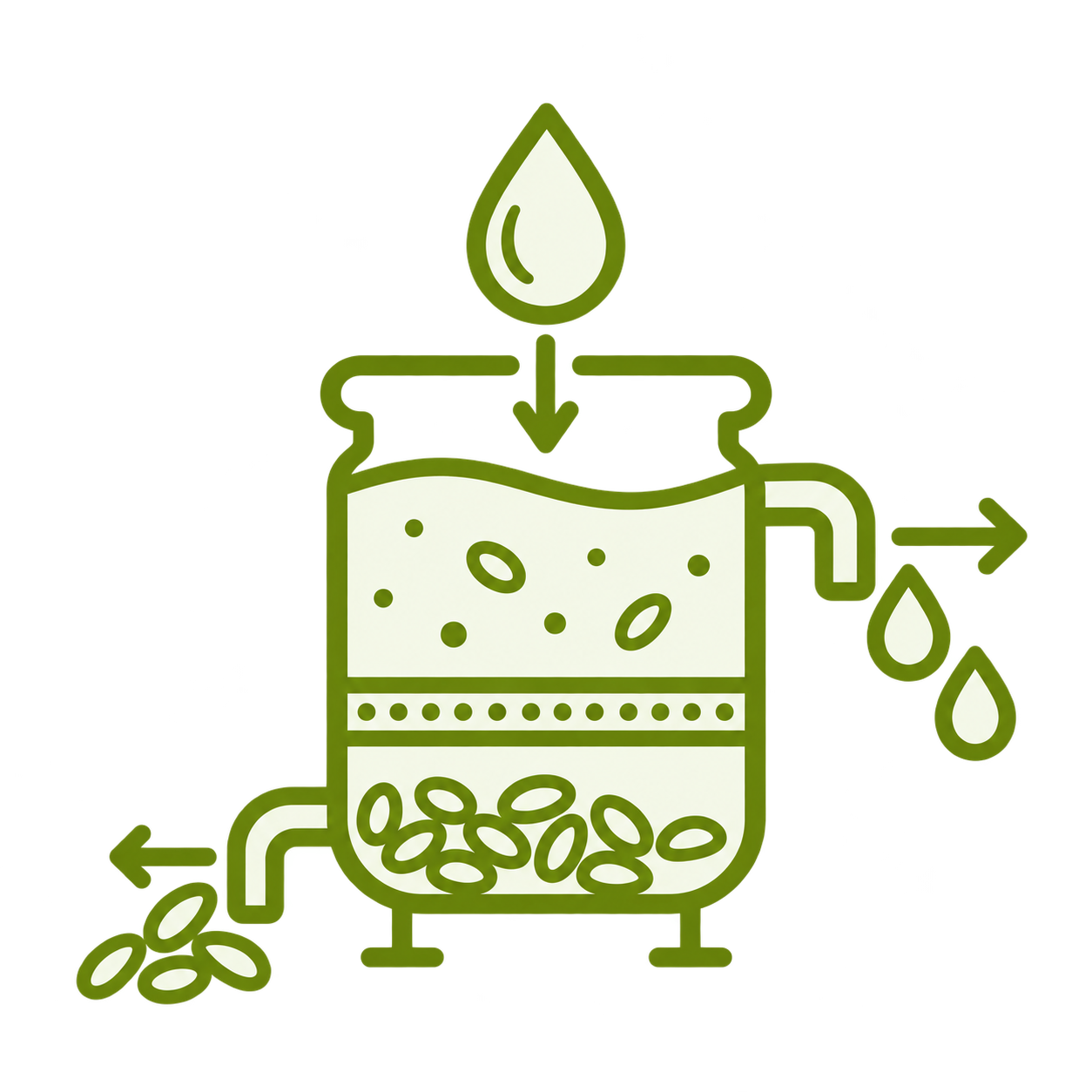
Typical manufacturing route: wet fractionation
To produce many protein isolates, the protein components are first separated from other components of the raw material in an aqueous phase.
-
Prepare the raw material
Seeds or pulses are cleaned and milled. Oil-rich raw materials may be de-oiled beforehand. -
Transfer the protein into the liquid phase
The flour is mixed with water. Suitable process conditions and pH values allow part of the proteins to be brought into solution or dispersion. -
Separate accompanying substances
Undissolved fibres, starch and other components are removed using suitable separation processes. -
Recover the protein
Changing the pH value can specifically reduce the solubility of the protein so that it precipitates and can then be separated. -
Process and dry
Depending on the process, the protein fraction is washed, processed further and then made into a fine protein powder, for example by spray drying.

What does more extensive purification mean for quality?
Wet fractionation enables high protein contents and removes a large proportion of the original accompanying substances.
At the same time, pH, water, temperature and drying can influence the protein structure and thus functional properties such as solubility, emulsifying capacity, water-binding capacity or texture.
More protein is not automatically better: An isolate may be ideal for certain applications. In other recipes, however, a less heavily processed concentrate or a functionally optimised protein may offer better properties.
Protein hydrolysates and peptides
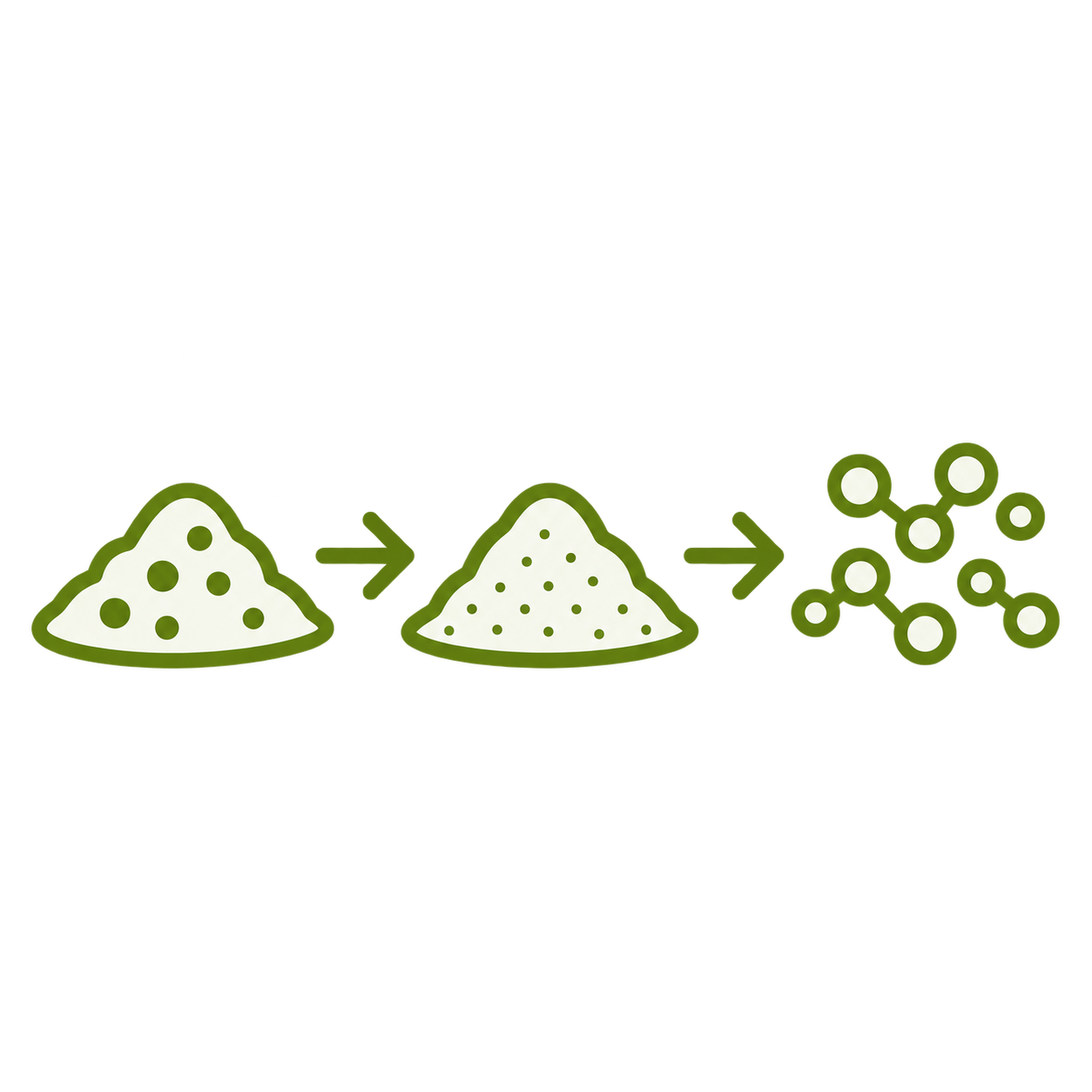
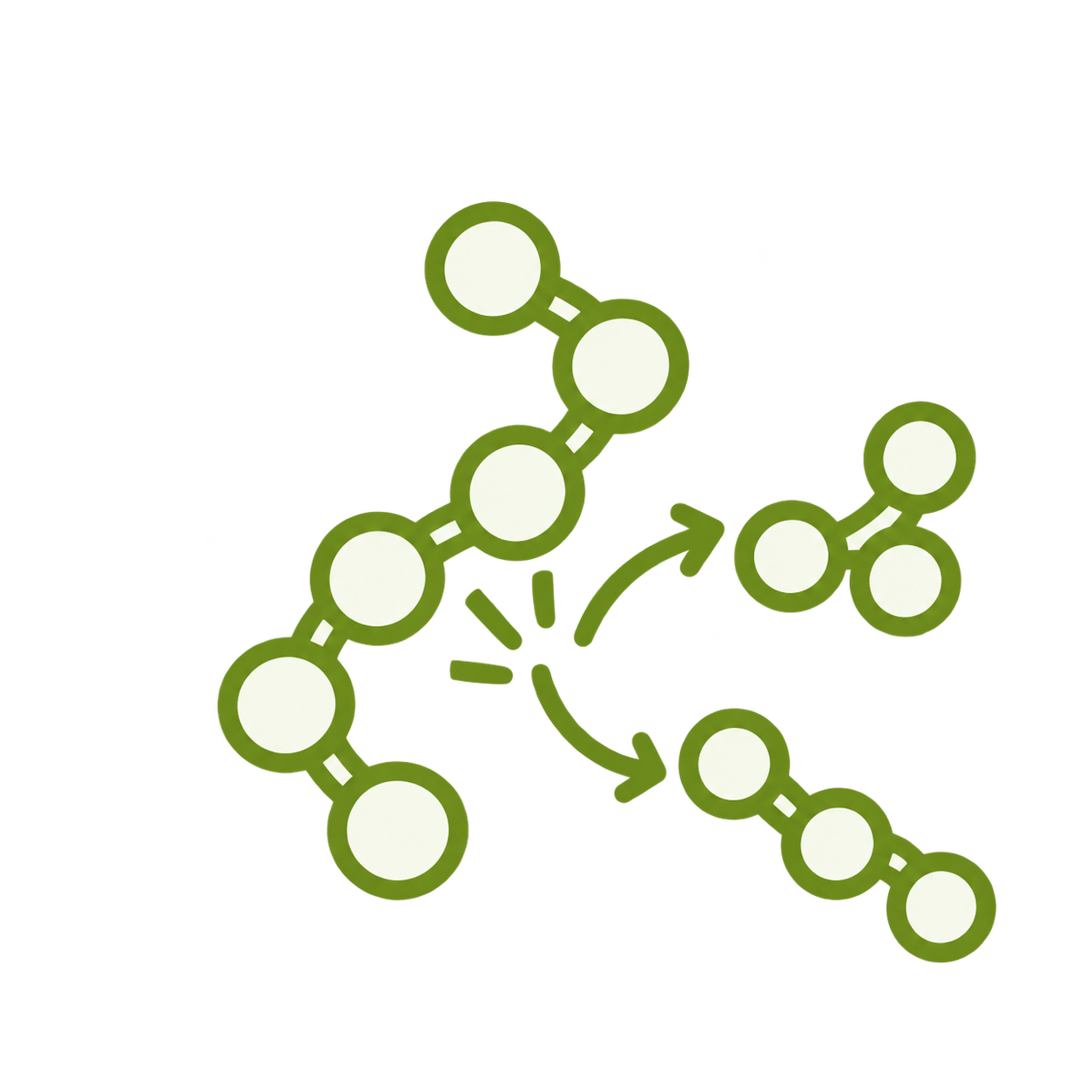
In a protein hydrolysate, the primary aim is not to reduce the proportion of other raw material components. Instead, the protein itself is specifically broken down into smaller units.
Long protein chains are partially or largely broken down into shorter peptides and – depending on the degree of hydrolysis – also into free amino acids.
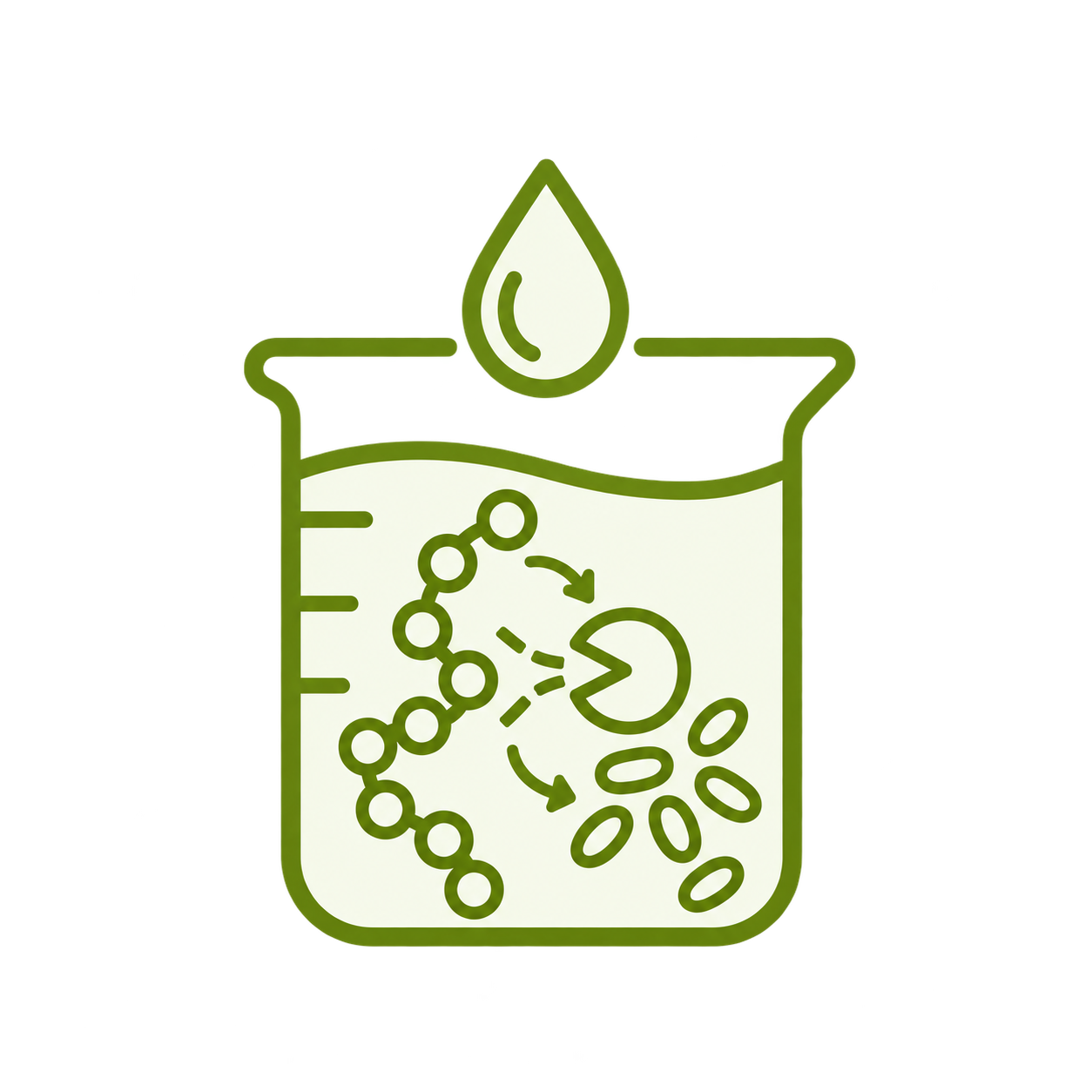
How are protein hydrolysates made?
-
A protein raw material is processed with water into a suitable suspension or solution.
-
Enzymes cleave the protein chains specifically at certain points. Depending on the process, other hydrolysis methods are also possible.
-
The reaction is stopped as soon as the desired degree of hydrolysis has been reached.
-
Depending on the product, remaining components are separated off. The hydrolysate can then be concentrated and dried.
Starting materials can include, for example, proteins from soya, peas, wheat or other plant-based raw materials. Protein concentrates or isolates that have already been purified can also be hydrolysed subsequently.
How do the properties change?
Hydrolysis produces smaller protein components whose physical and sensory properties may differ from those of the original protein.
Depending on the degree of hydrolysis, properties such as solubility, viscosity, emulsifying behaviour and taste can change. The properties depend heavily on the raw material, the enzymes used and the process control.
More extensive hydrolysis can also lead to bitter taste notes. This effect can be influenced by the choice of suitable enzymes, process conditions and further processing steps.
Distinction from concentrates and isolates
In protein concentrates and protein isolates, the protein content is increased by removing other components of the raw material.
In a protein hydrolysate, by contrast, the focus is on changing the protein itself: the protein chains are specifically broken down into smaller peptides and, where applicable, free amino acids.
Which plant protein is suitable for your application?
Protein content, taste, solubility and technological properties must always be considered together. We will be happy to help you select a suitable protein grade for your recipe and application.